INTENDED USE
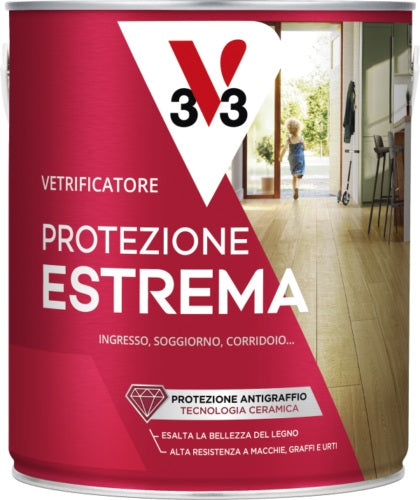
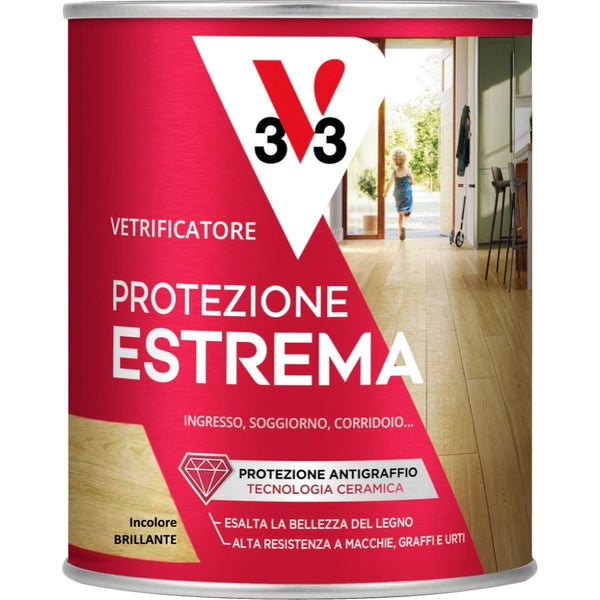
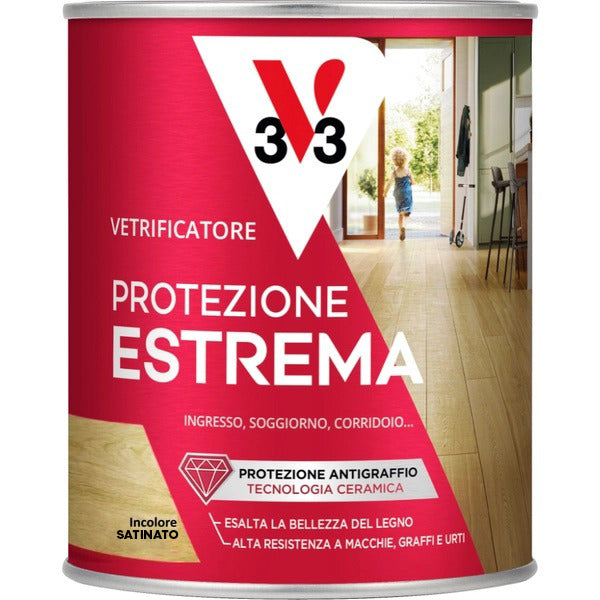
Ideal for all types of European and exotic wood parquet. Particularly suitable for high-traffic areas such as entrances and hallways.
PROPERTY'
- Innovative! Enriched with polycarbonate resins to ensure long-lasting protection.
- Resistant to scratches, repeated passages and stains
- High quality finish for a perfect seal
- Enhances and enhances the wood grain
Directions for use
PREPARATION
The wood must be raw, dry and thoroughly cleaned, without any dust residue.
• NEW PARQUET: sand with sandpaper (120 grit).
• GLAZED OR OILED PARQUET: sand with sandpaper in 3 passes (50 grit, then 80 grit, then 120 grit), until you get to the raw wood.
• WAXED OR OLD PARQUET: strip with a specific parquet stripper, then sand mechanically in three passes (50 grit, then 80 grit, then 120 grit), until you get to the raw wood.
• RAW FATTY WOOD (teak, doussié, bangkirai…): on these types of wood it is advisable to apply parquet oil and not glazes.
APPLICATION
Ideal application conditions: between 12° and 25°C on dry wood and in a draft-free environment. Ready to use. Apply in three coats, or two after the Primer.
• Mix the vitrifier well, before and during application, using a wide stirrer to homogenize the product well.
• Spread the glaze with a short-haired roller (12 mm). Apply in regular, generous, crisscross layers, finishing in the direction of the wood grain. Leave to dry for 2 hours.
• Sand (180 grit) and remove dust, then apply a second coat and leave to dry for 2 hours.
• If necessary, apply a third coat, without sanding between the two coats.
• Leave to dry for 24 hours. Use the room with caution during the first few days; the paint's optimal resistance is achieved after a week.
MAINTENANCE
To maintain the beauty of your parquet, use V33 PARQUET CLEANER AND POLISH . Once or twice a year, to prolong the protection of your parquet, treat the surfaces with V33 PARQUET & LAMINATED FINISH RENOVATOR .
TOOLS
10mm microfibre roller
Synthetic fiber brush
SUGGESTIONS
- Following the instructions for using the product guarantees optimal results and prolongs its lifespan.
- To add color to your wood, you can apply V33 Interior Wood Varnishes .
- Avoid accumulation of vitrifier between joints and chamfers.
- The milky appearance of the vitrifier when it is in the can disappears once it is spread out and after drying.
FAQ
- How can I re-glaze my parquet floor, which has been treated with linseed oil for years? We strongly advise against re-glazing this parquet floor because the linseed oil, once it has soaked into the wood fibers, could cause the varnish to peel off.
- What product do you recommend for glazing my wood-clad terrace? It's not possible to glaze your terrace because glazes don't withstand outdoor weather conditions. To protect it, choose an oil, such as V33 Terrace Saturating Oil , which is rich in essential oils and nourishes the wood without altering its natural appearance.
- Can I apply a matte glaze over a glossy product that seems too shiny? Yes, elements of the same type of glaze can be safely layered or mixed together.
- Can you vitrify over a wood stain? Yes, all V33 vitrifiers can be applied over a wood stain. In this case, however, apply the stain in a single thin layer, then sand it with medium-grit sandpaper, and finally proceed with vitrifying.
- Can you apply a varnish and then protect it with a glaze? Varnishing is only possible on unfinished wood. In this case, a single coat of varnish is sufficient to avoid creating a buildup. Sand and then apply two coats of your chosen glaze. On woods like oak or chestnut, remember to apply a primer before varnishing.
- Can I protect my laminate flooring with a glaze? No, glazes cannot be applied to laminate flooring. In this case, you can use V33 Parquet & Laminate Renovator to increase its lifespan.
- Can I glaze my parquet with underfloor heating? Absolutely. Before you begin varnishing, you need to turn off the underfloor heating for three days. You can turn it back on a week after varnishing.